After being closed for several years due to restoration work, the Dominican Church in Augsburg has reopened its doors to the public.
To mark the occasion, a site-specific media art installation was developed in close collaboration with various art historians and the Department of Culture, World Heritage, and Sport. This installation explores the vibrant history of the site while simultaneously presenting the church anew as a contemporary cultural space.
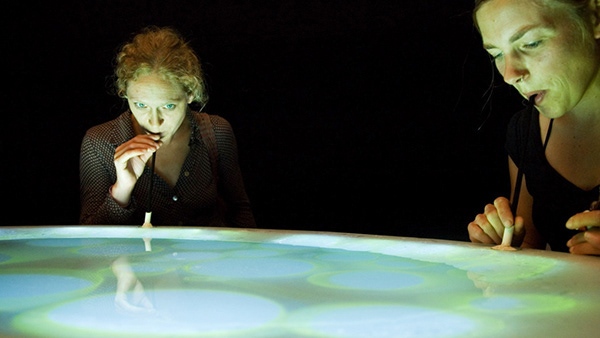
The installation functions as a non-linear, exploratory spatial experience:
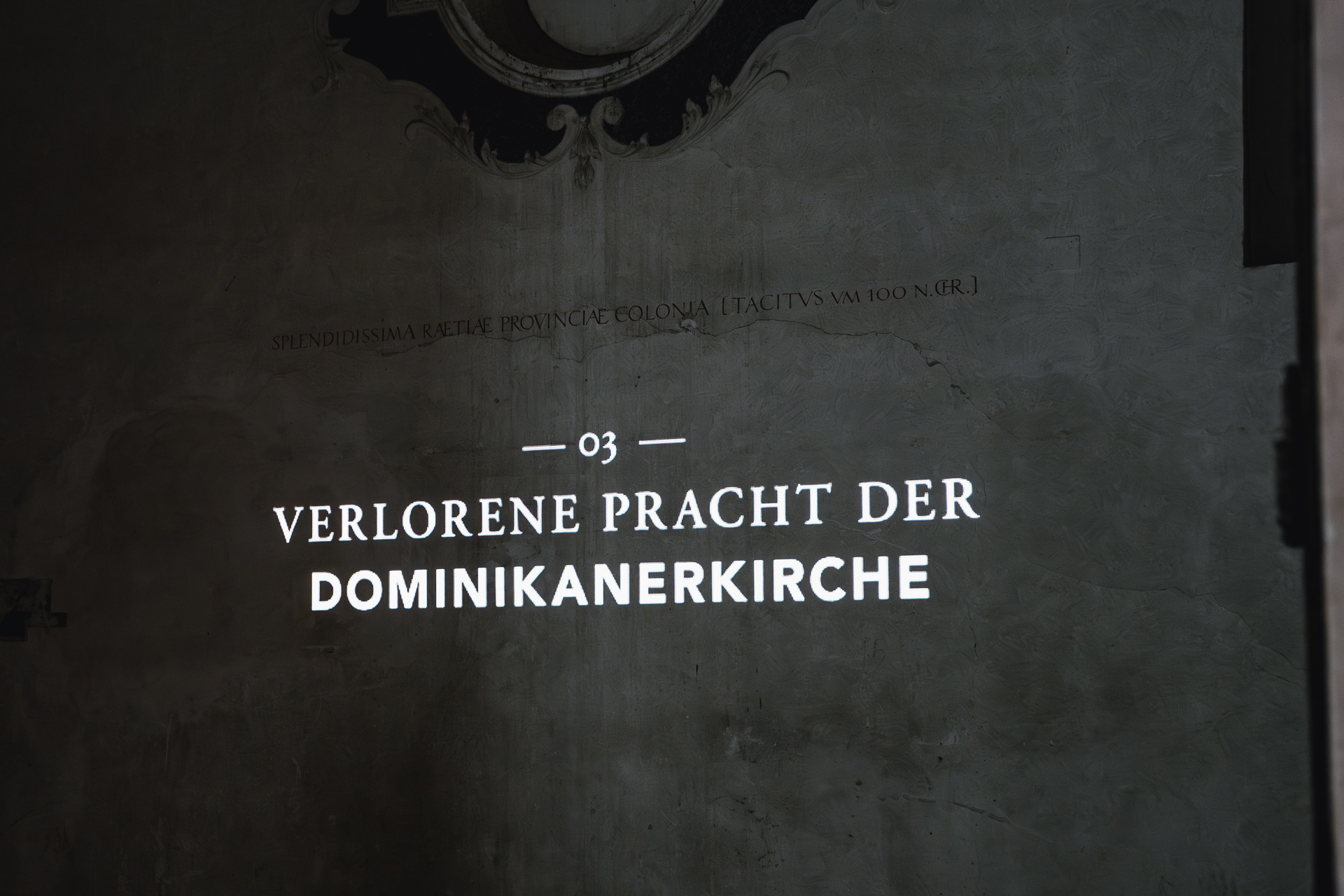
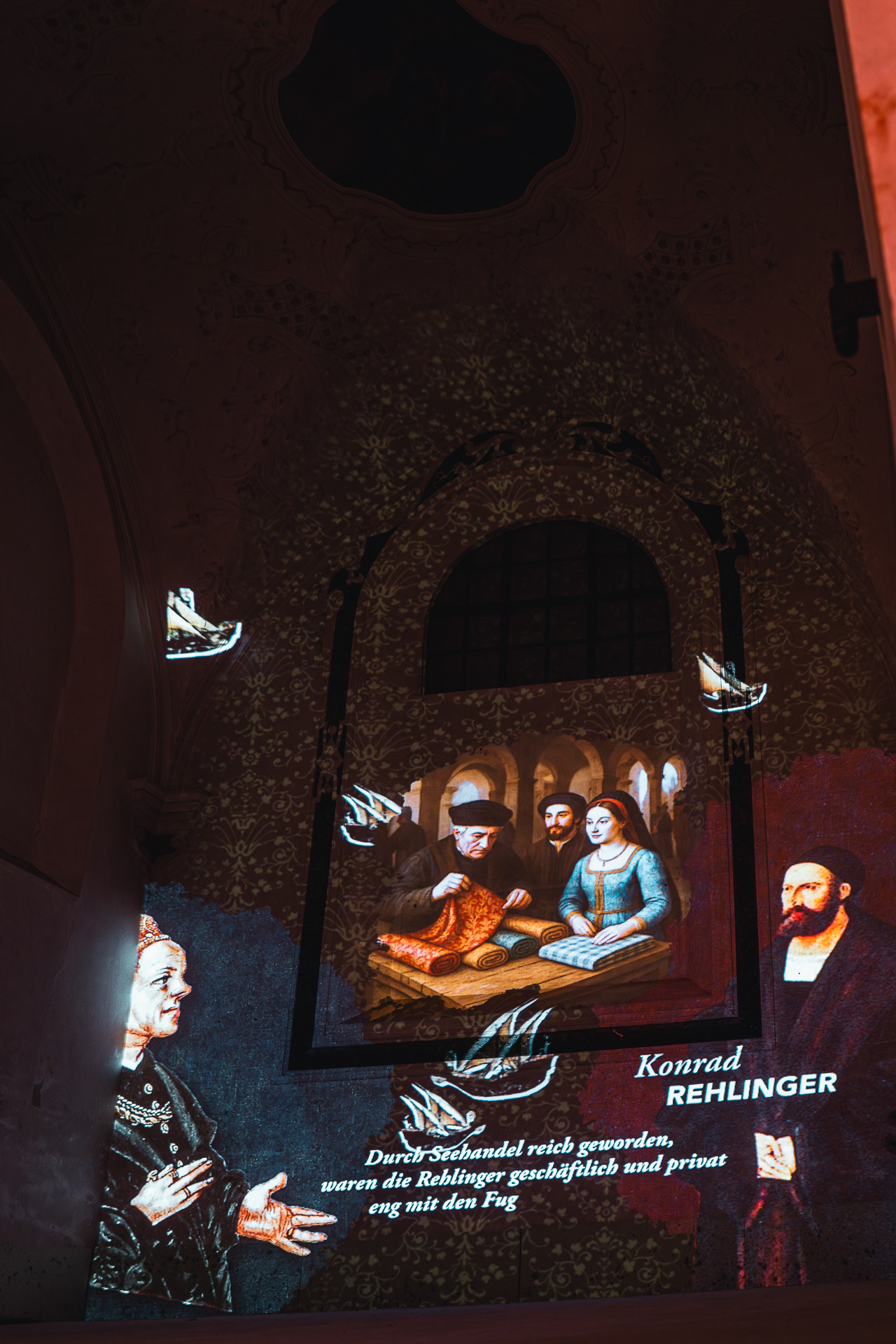
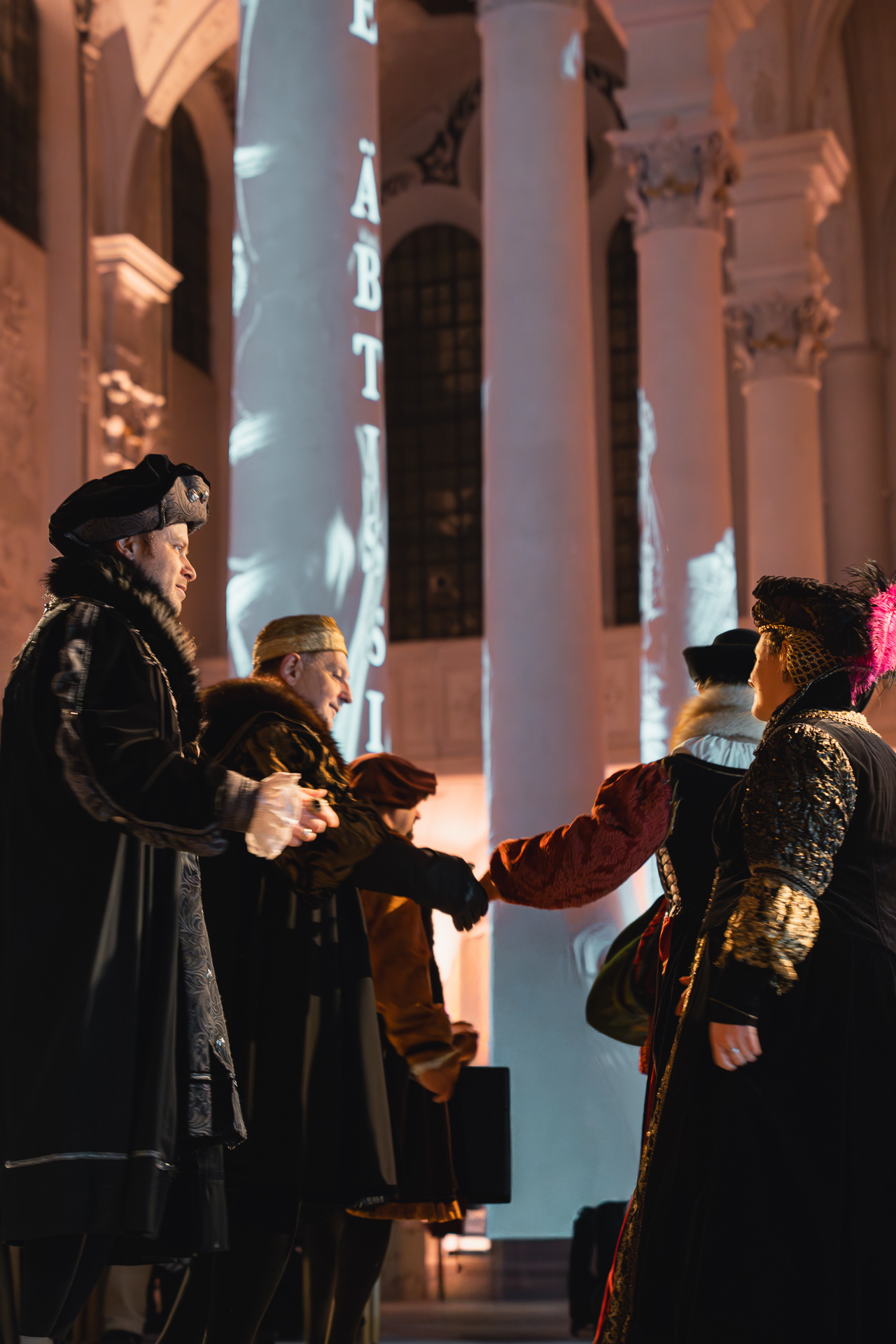
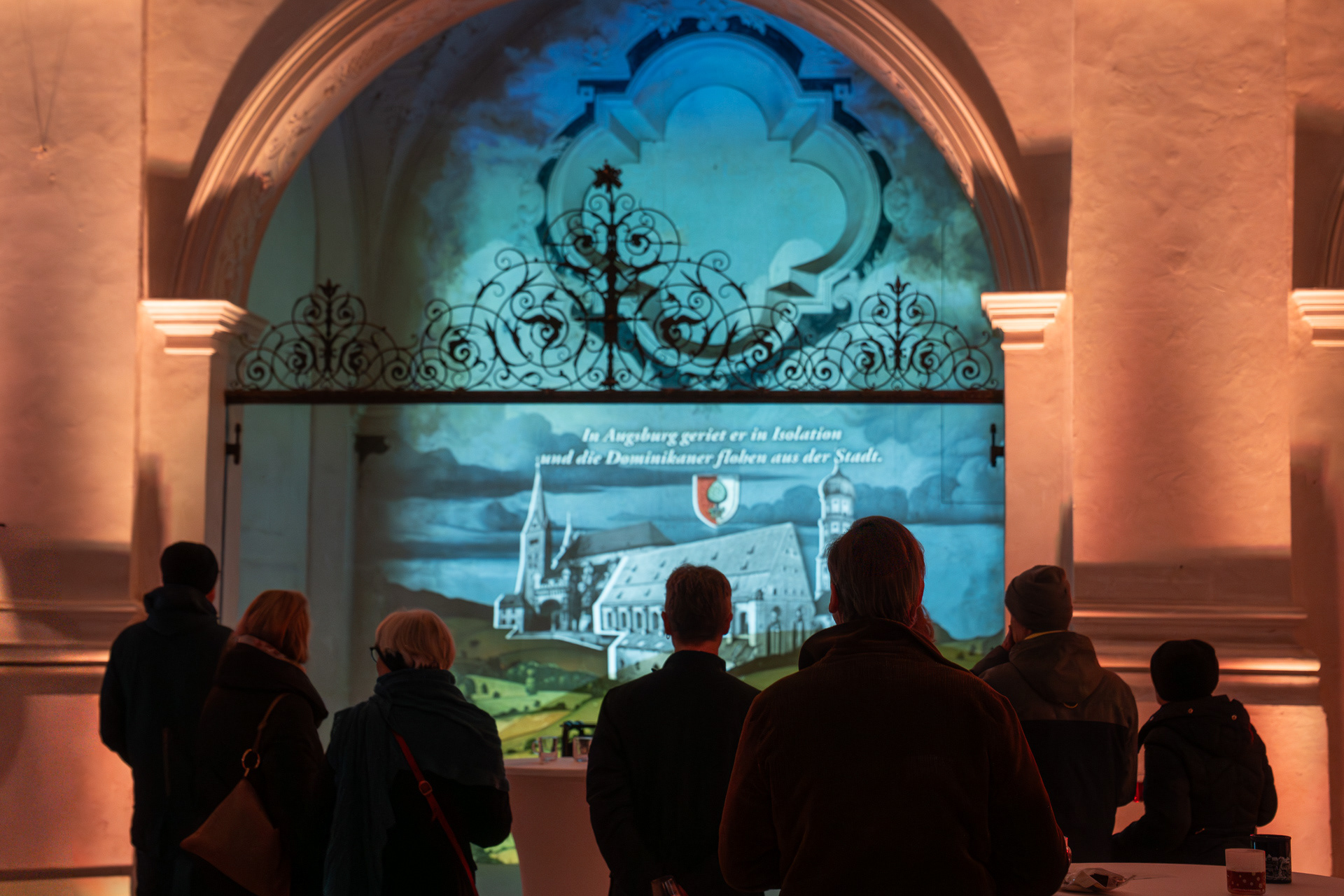
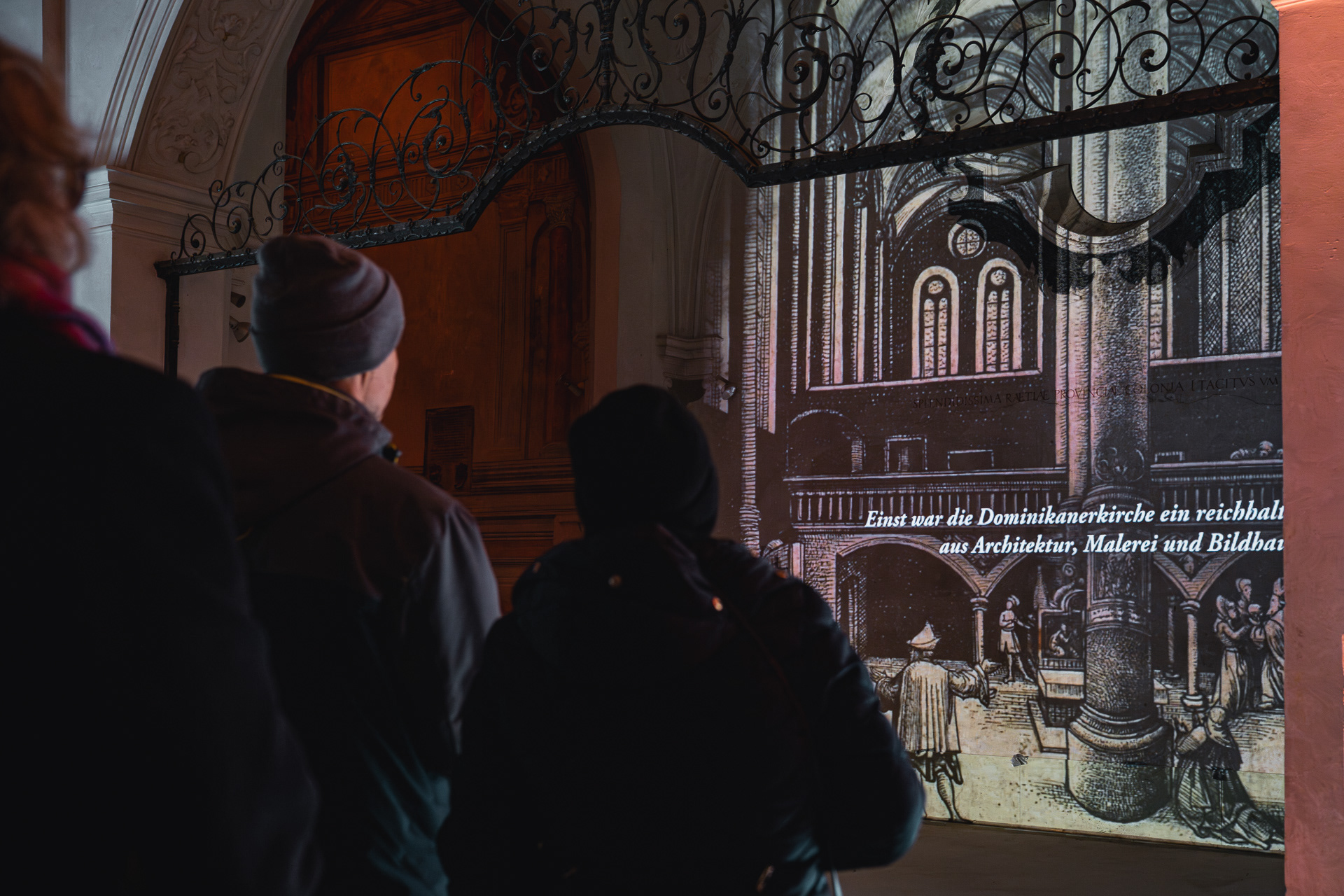
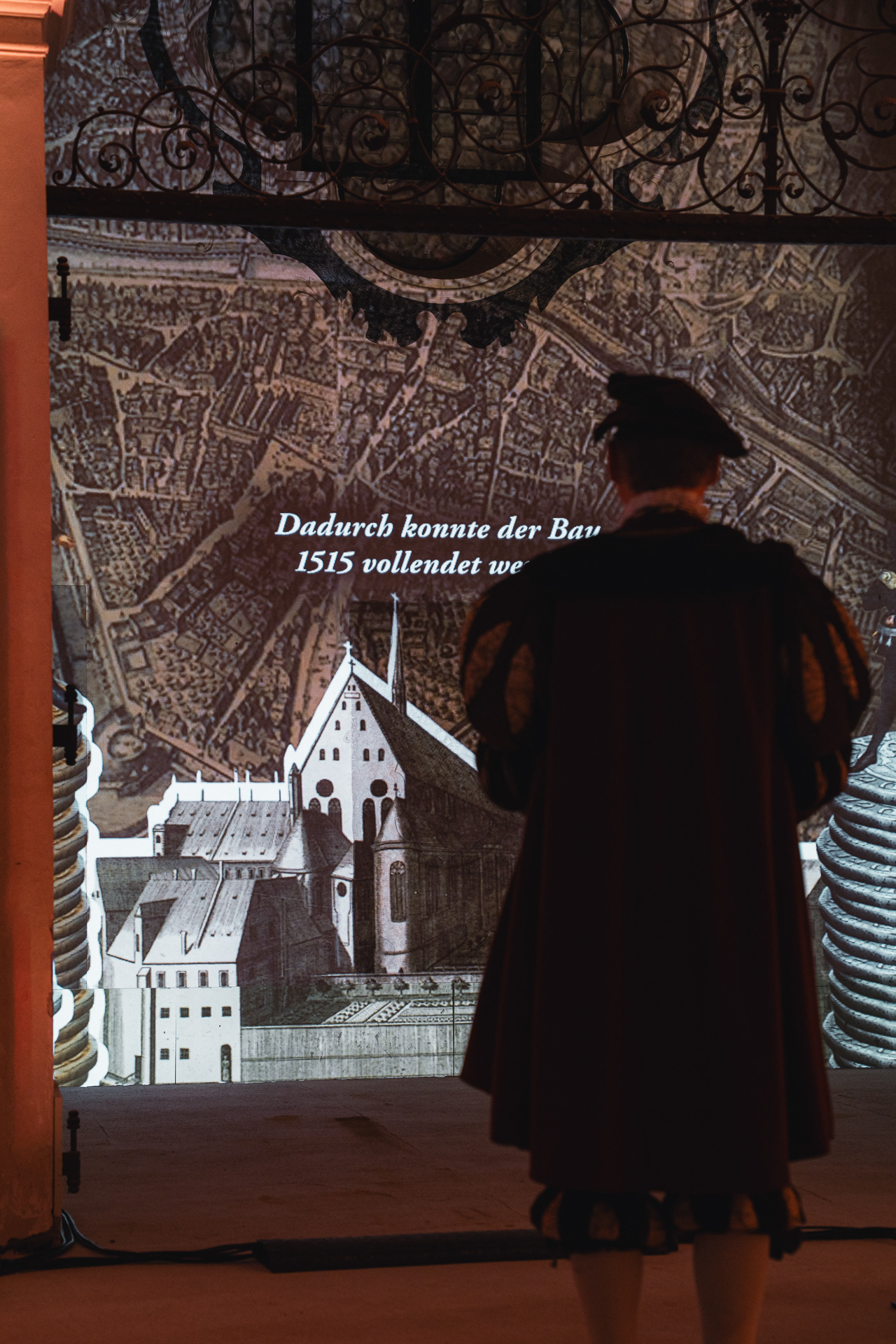
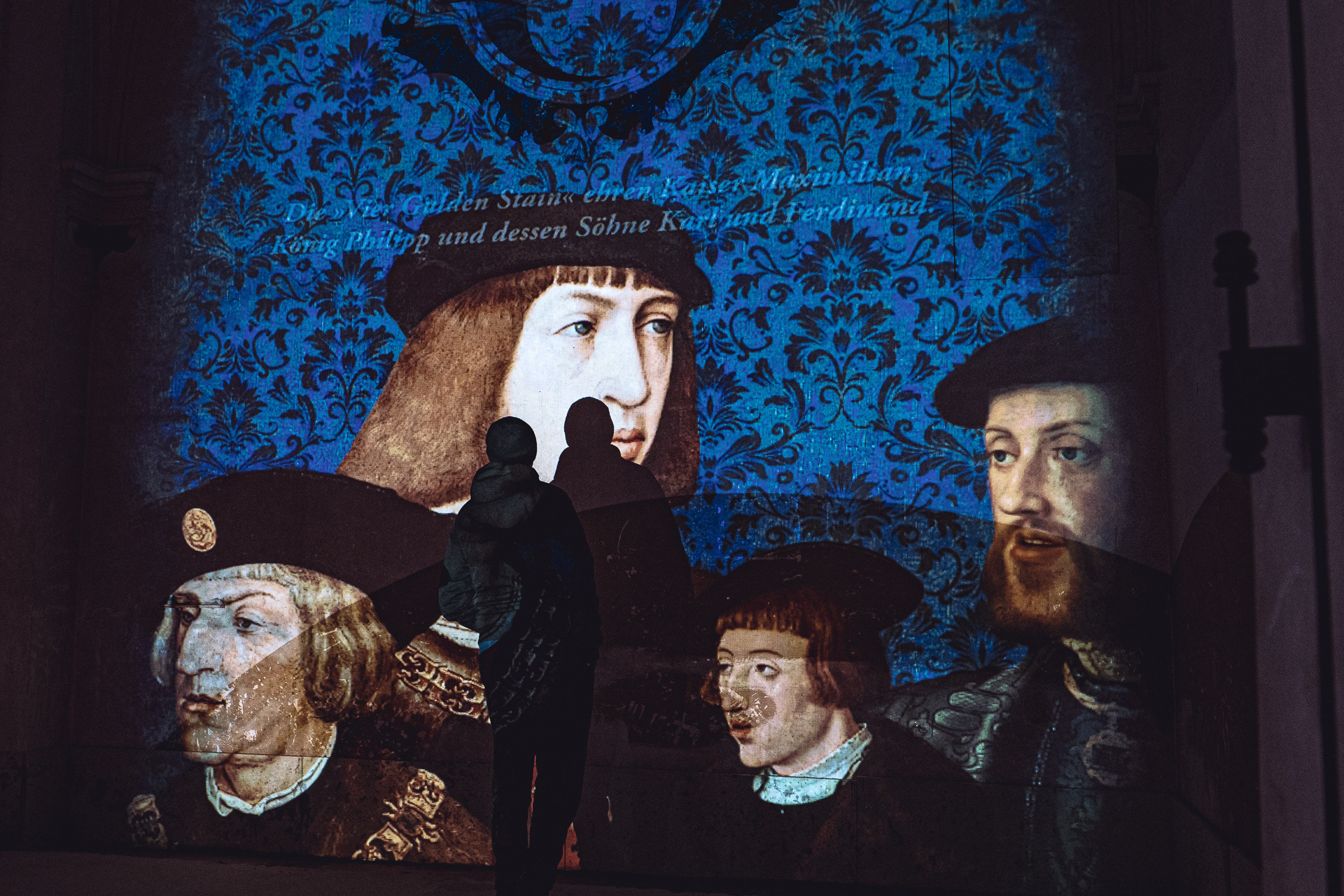
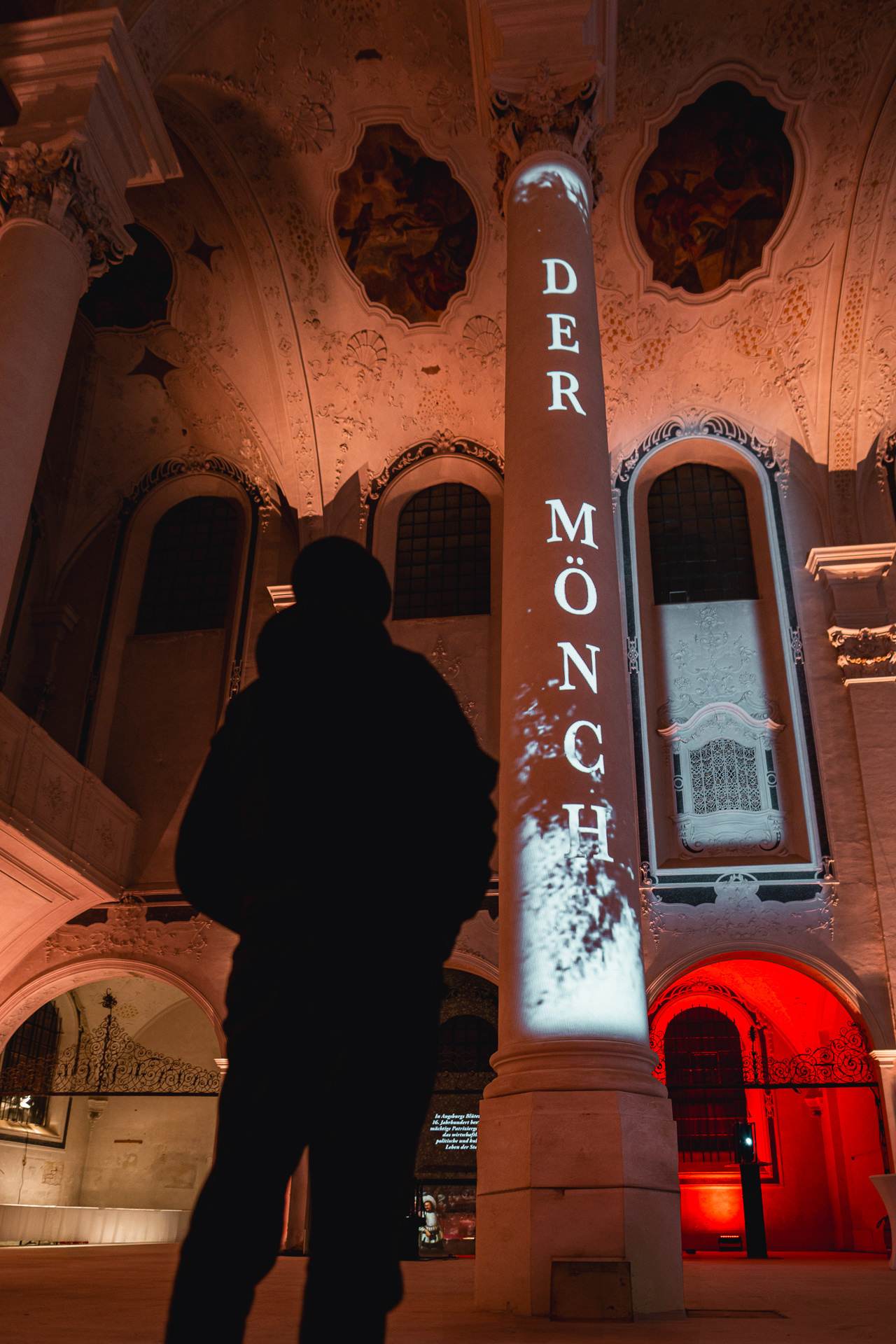
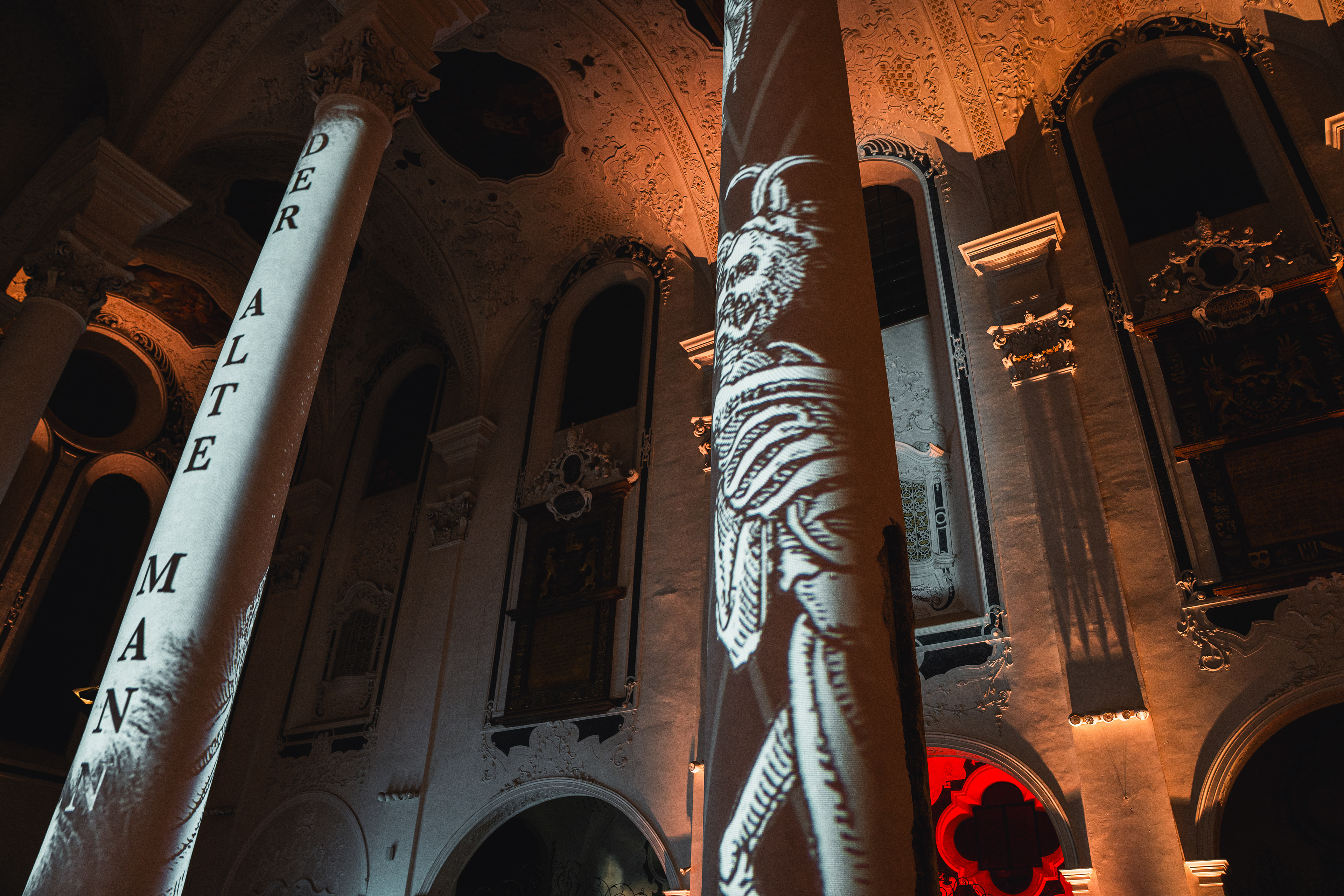
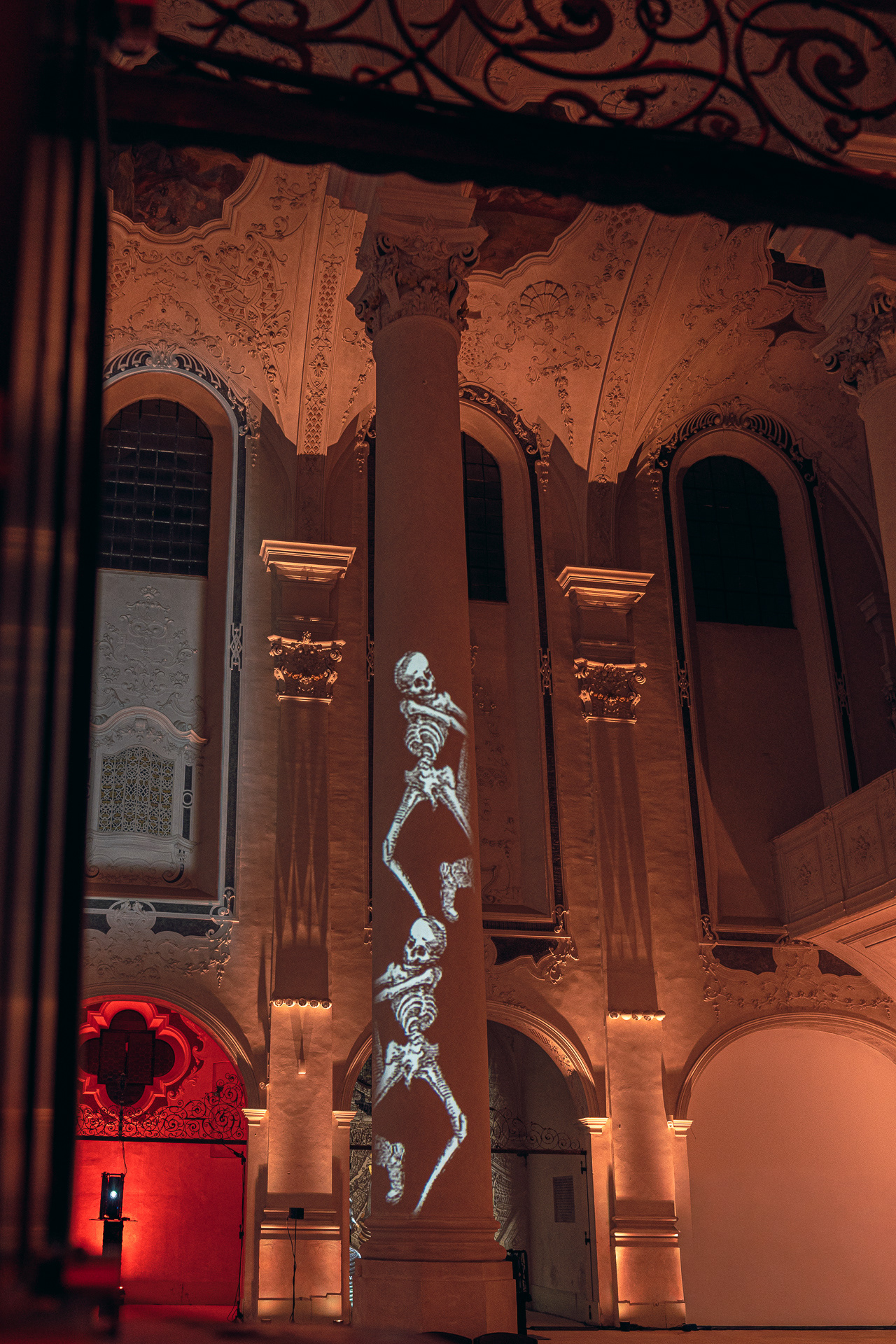
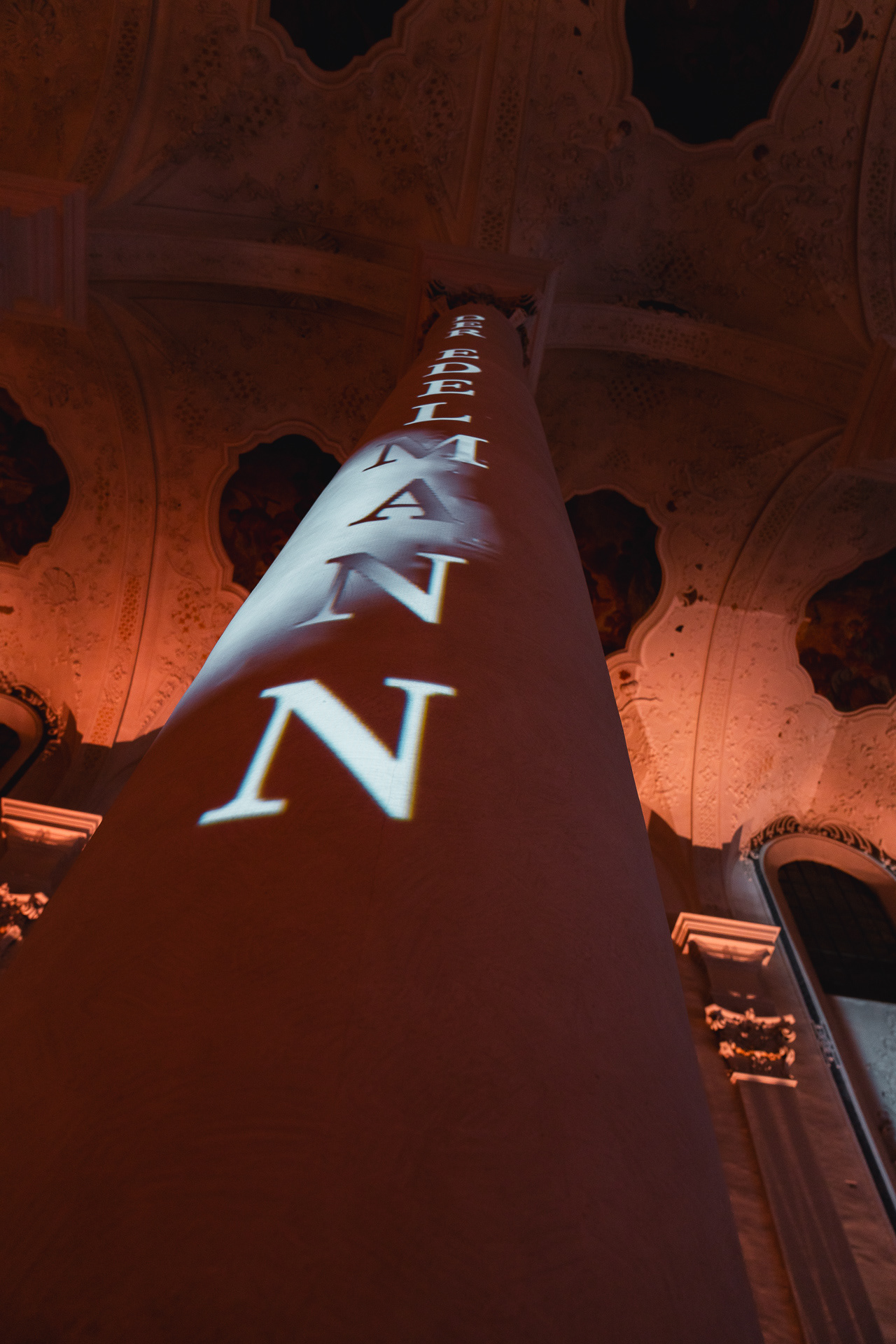
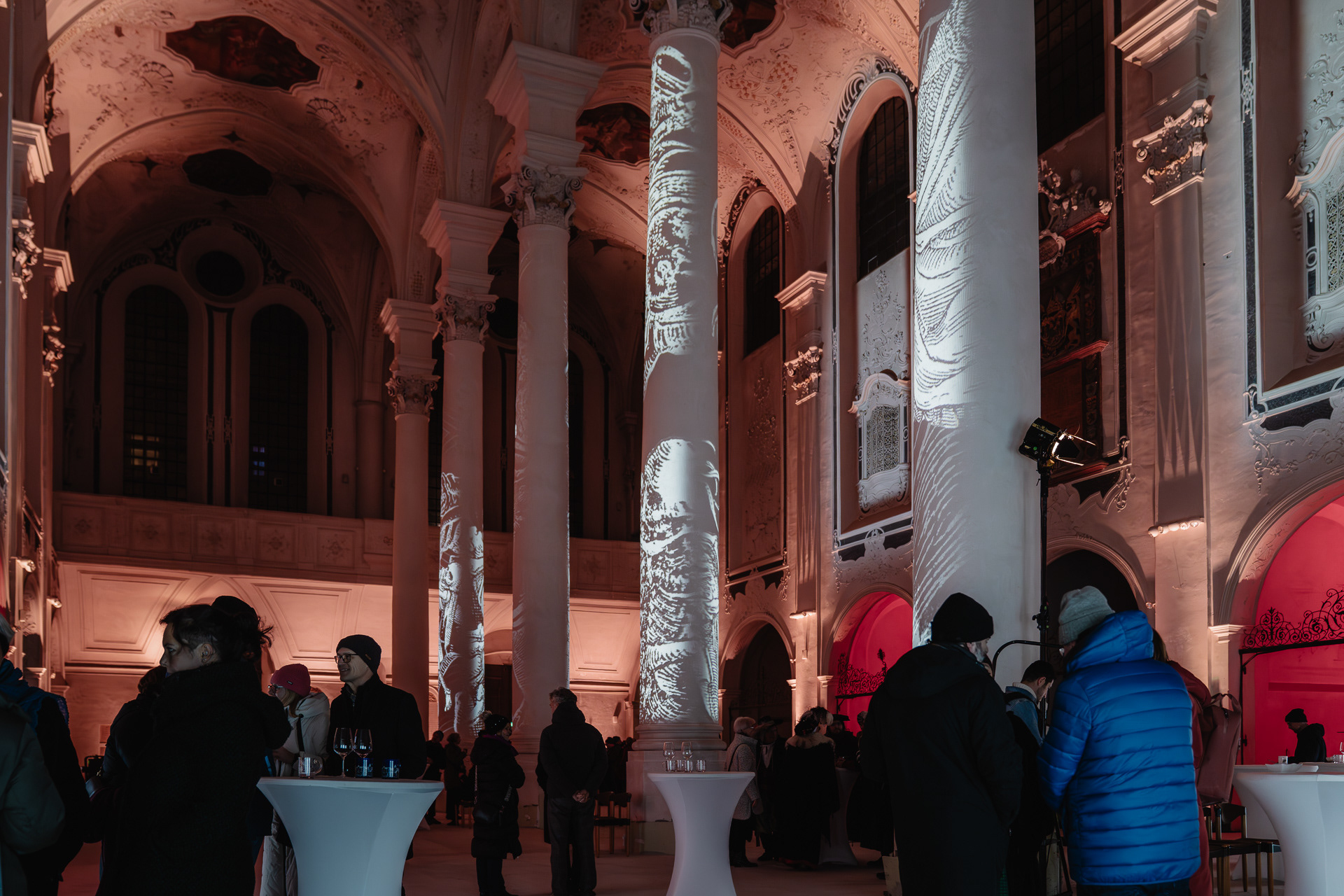
The central colonnade, serving as an introductory element for visitors, features a striking and expansive display of elements from Holbein's Dance of Death, complemented by contemporary interpretations. These animations were deliberately rendered in black and white to respect the historical source material and to provide a fitting contrast to the colorful, narrative clips in six of the church's chapels. These clips are also based on historical images, supplemented by typographic and illustrative elements. They address milestones in the building's history, the Reformation, lost artworks, the founding families as well as the patrician families.
The spatial concept emphasizes a respectful coexistence of historical building fabric and digital elements. This creates a unique spatial experience, combining the preserved physical elements with the added digital narratives.
Due to the extremely tight schedule, prototypes based on a digital twin were created and simulated in virtual reality throughout the entire design process to fine-tune dimensions and dynamics before the media technology was integrated into the physical space.
Developed in cooperation with Prof. Dr. phil. Sibylle Appuhn-Radtke, Prof. Dr. Andrea Gottdang (Augsburg University), Christian Schimanski (Holzschuher History Archiv), Manuela Wagner, Frank Albert and Claas Henschel (Kunstsammlungen und Museen Augsburg), Sven Exenberger (Dimension3 GmbH).